Aurora is the content management system I wrote, and the one I work with. The back office, the page editor, the public rendering and the deployment tooling are mine: when a client asks for something the tool cannot do, I add it to the tool instead of working around it.
This site is the most direct demonstration of that: it runs on it, and the screenshots on the pages below come from the back office you would have in your hands.
- 12
- zone types to compose a page
- 48
- columns, to place a page precisely
- 3,400
- automated tests before every release
The tour, subject by subject
Each card opens a page explaining one part of the product, with the screenshot that goes with it. The list fills itself: I add a subject, it turns up here.
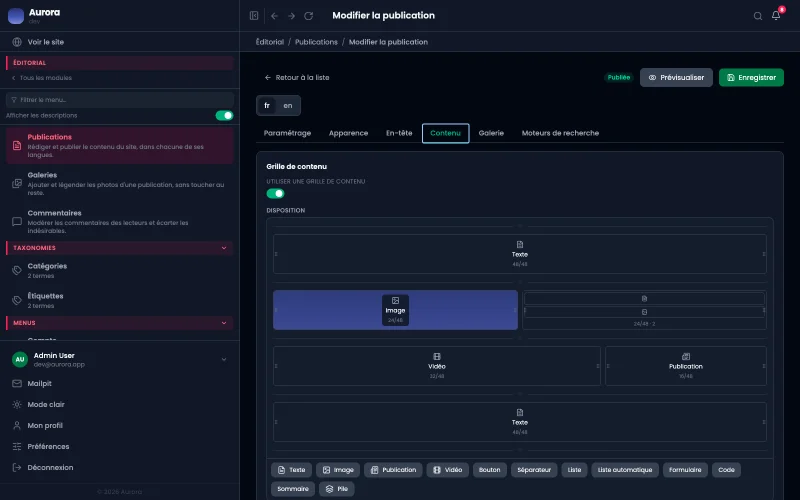
Composing a page
A page sits on a 48-column grid, one zone at a time, without writing a line of code.
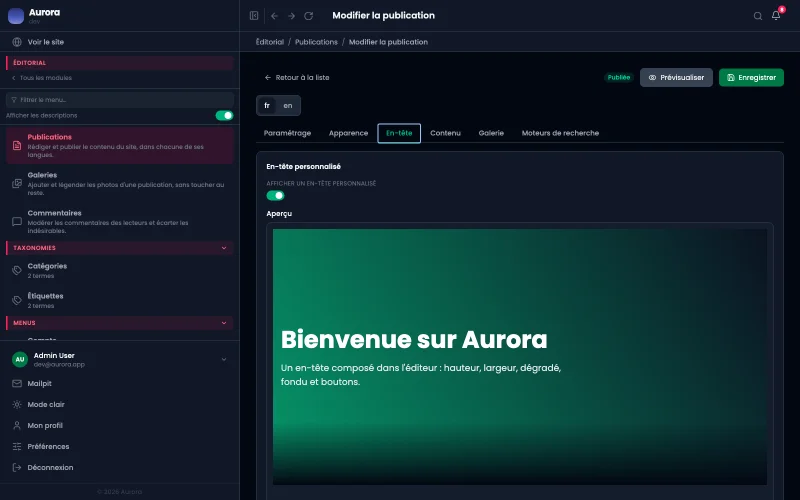
The page header
The top banner is set next to the content, with a preview that follows every change.
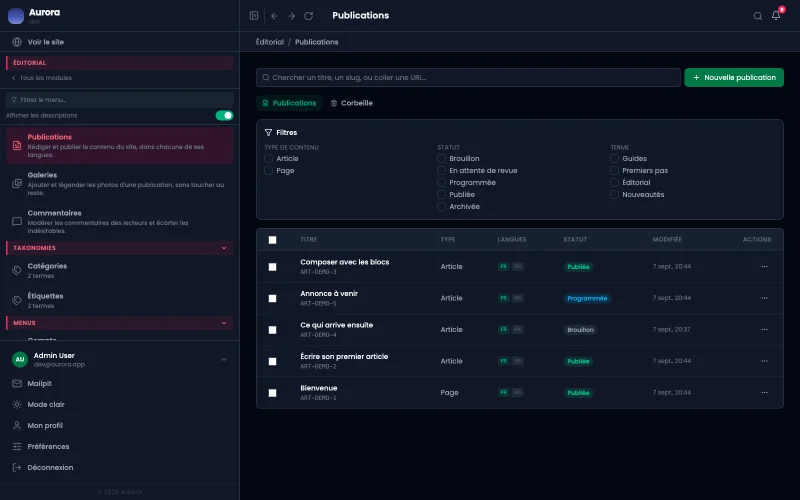
Publish, schedule, archive
Draft, review, schedule, publish, archive, bin: nothing goes out by accident.
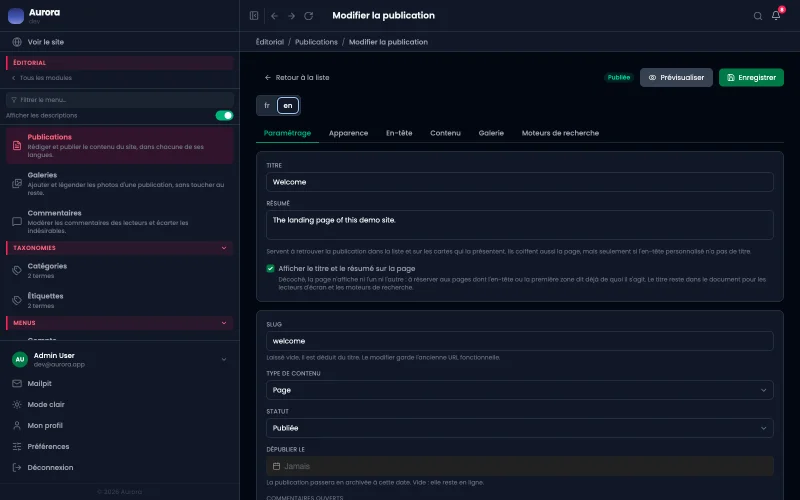
Two languages, one layout
Every publication exists in French and English, with its own words and its own address.
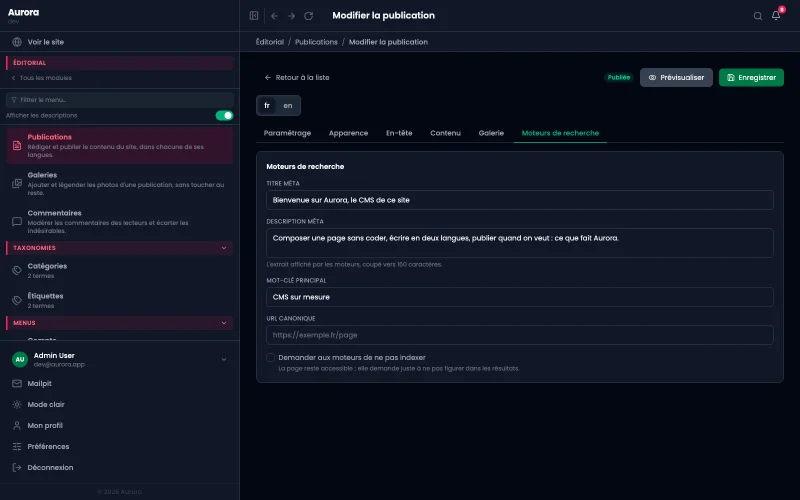
Search engines, no plugin
Titles, descriptions, indexing, sitemap and RSS are part of the product, not a third-party module.
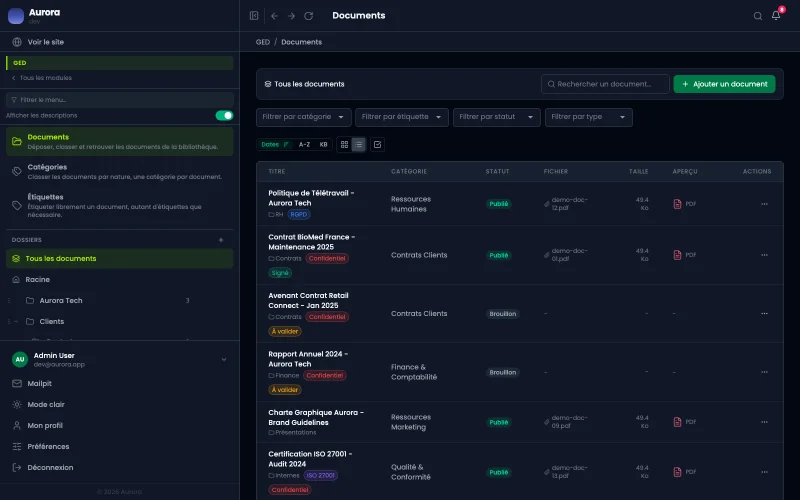
The media library
Files are filed, described, and served in several sizes as WebP.
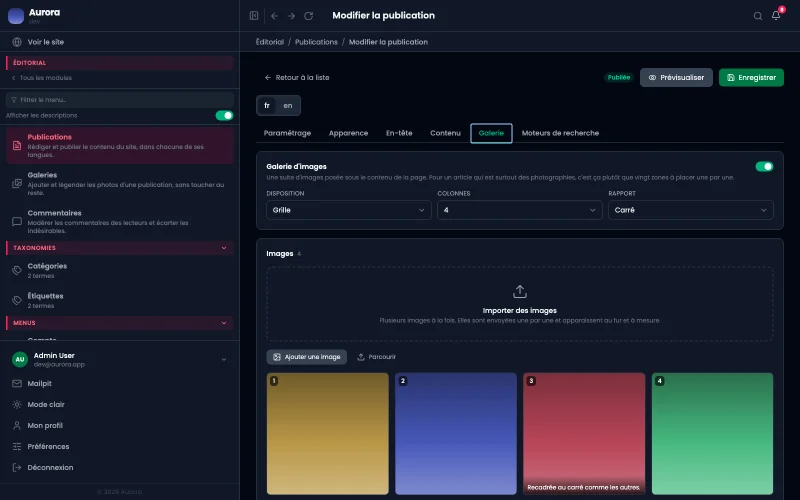
Photo galleries
A gallery is added under a publication without touching the rest of the page.
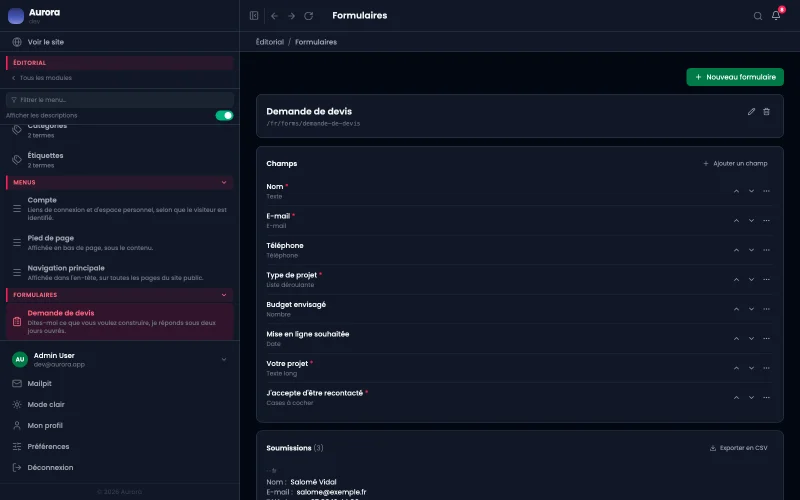
Forms
A form is built field by field, collects its submissions, and notifies by email.
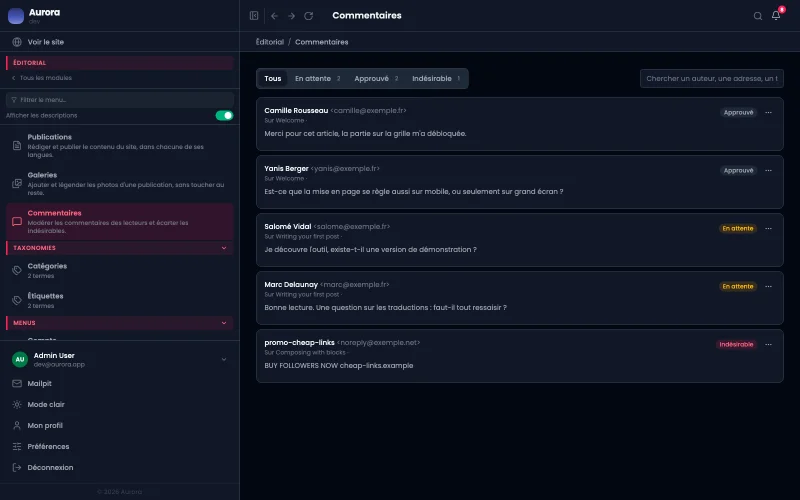
Comments
Opened per publication, moderated before they appear.
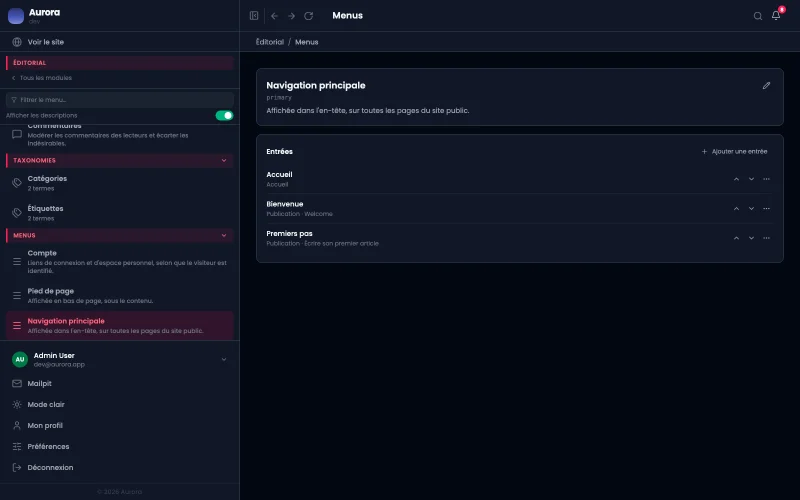
Menus
Navigation is composed in the back office, and points at things that actually exist.
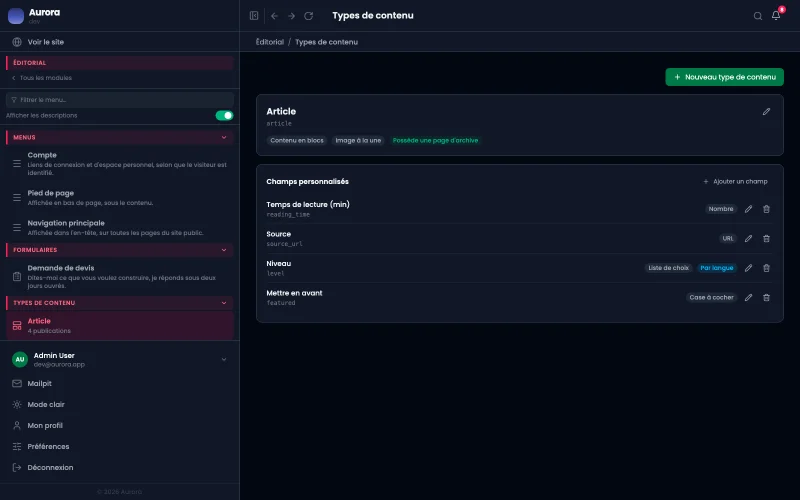
Content types and fields
Beyond pages and articles, a site can have types of its own, with their own fields.
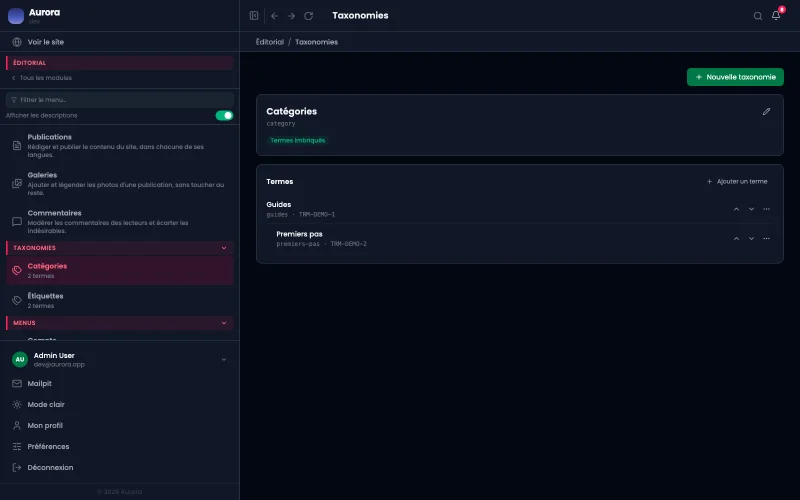
Categories and tags
Two ways to file: categories that nest, tags that do not.
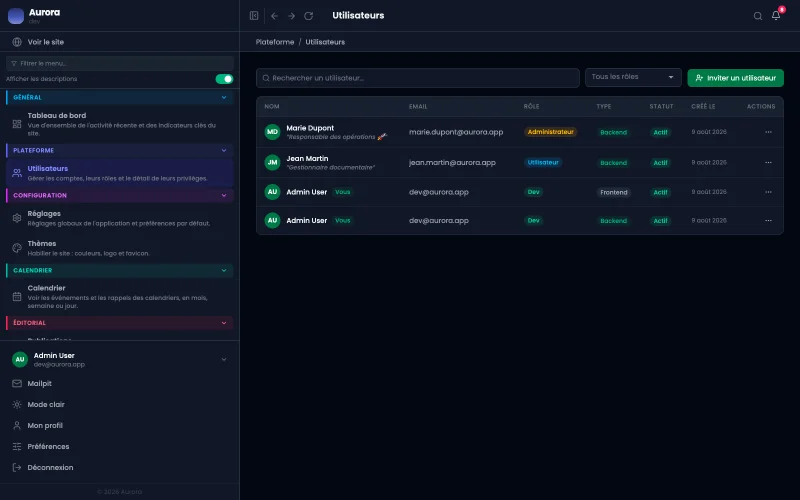
Accounts, roles and privileges
Everyone sees what concerns them: rights are granted screen by screen, not in bulk.
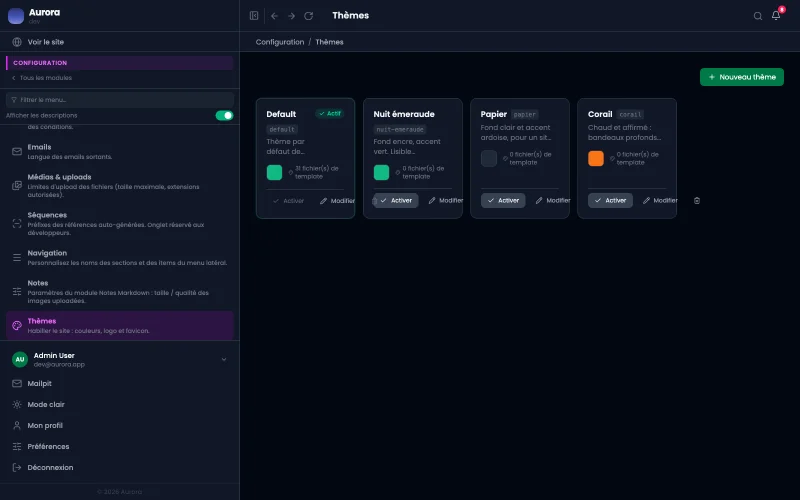
Theme, logo and favicon
The site's colours are chosen in the back office, and change the public rendering.
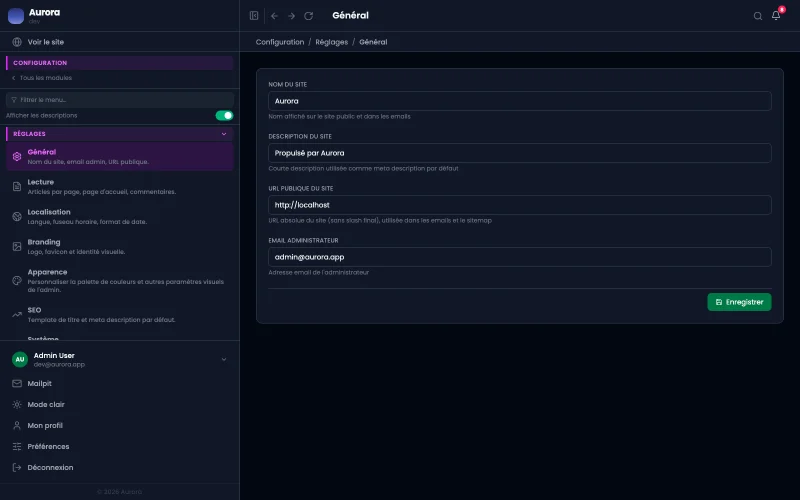
Settings and modules
Each site switches on only what it needs, and integrations run on the client's own account.
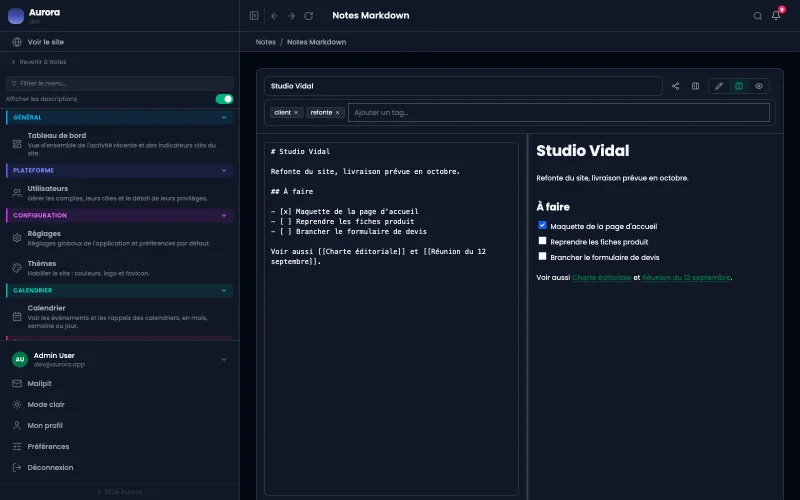
Markdown notes
Linked note-taking, inside the same tool as the site.
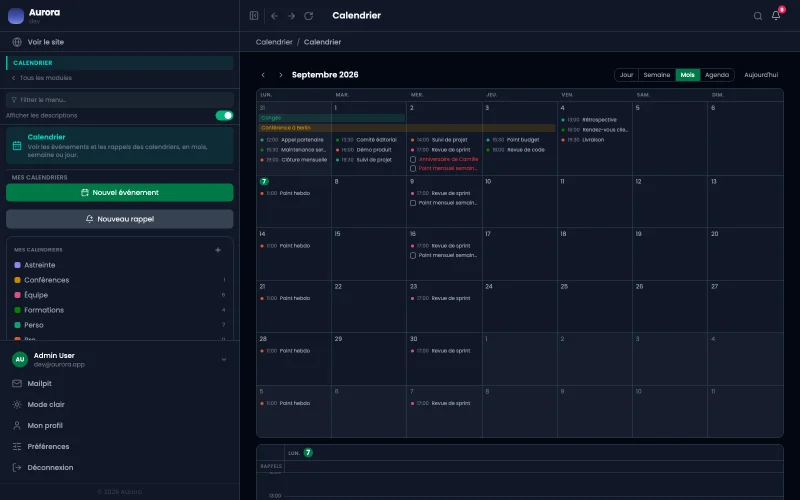
The calendar
Several calendars, repeating events, reminders, and read-only sharing.
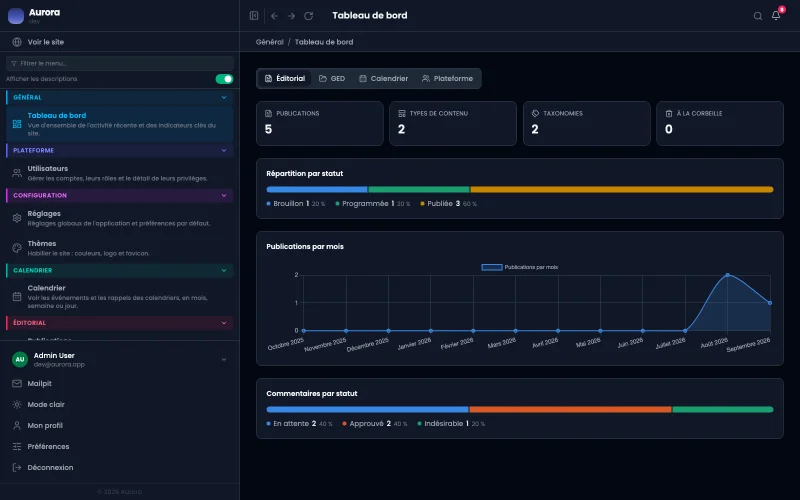
The dashboard
The state of the site on one screen, and a search that crosses the modules.
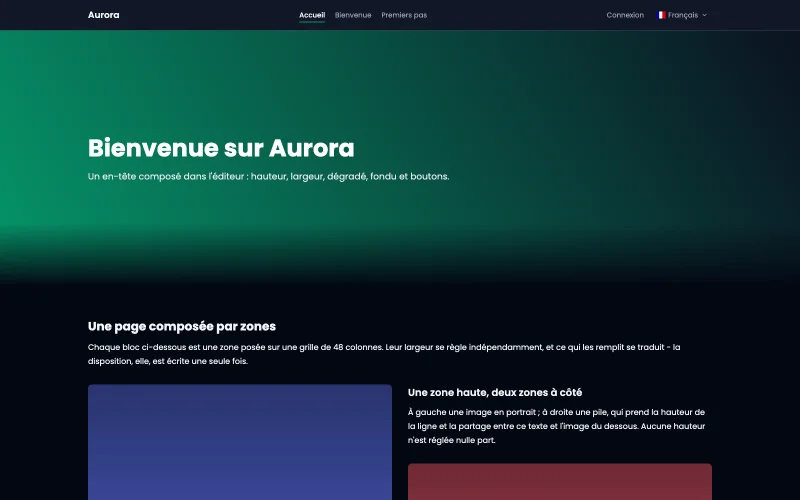
The public site
The front end is written by hand, with no bought theme and no imposed component library.
Delivery and updates
The base is versioned and tested; a client site gets fixes without being rebuilt.
Looking for a site you can run yourself, in both languages, without depending on a stack of plugins? That is exactly what this tool is for. The base is public, and the code can be read.